Hand-tufted wool
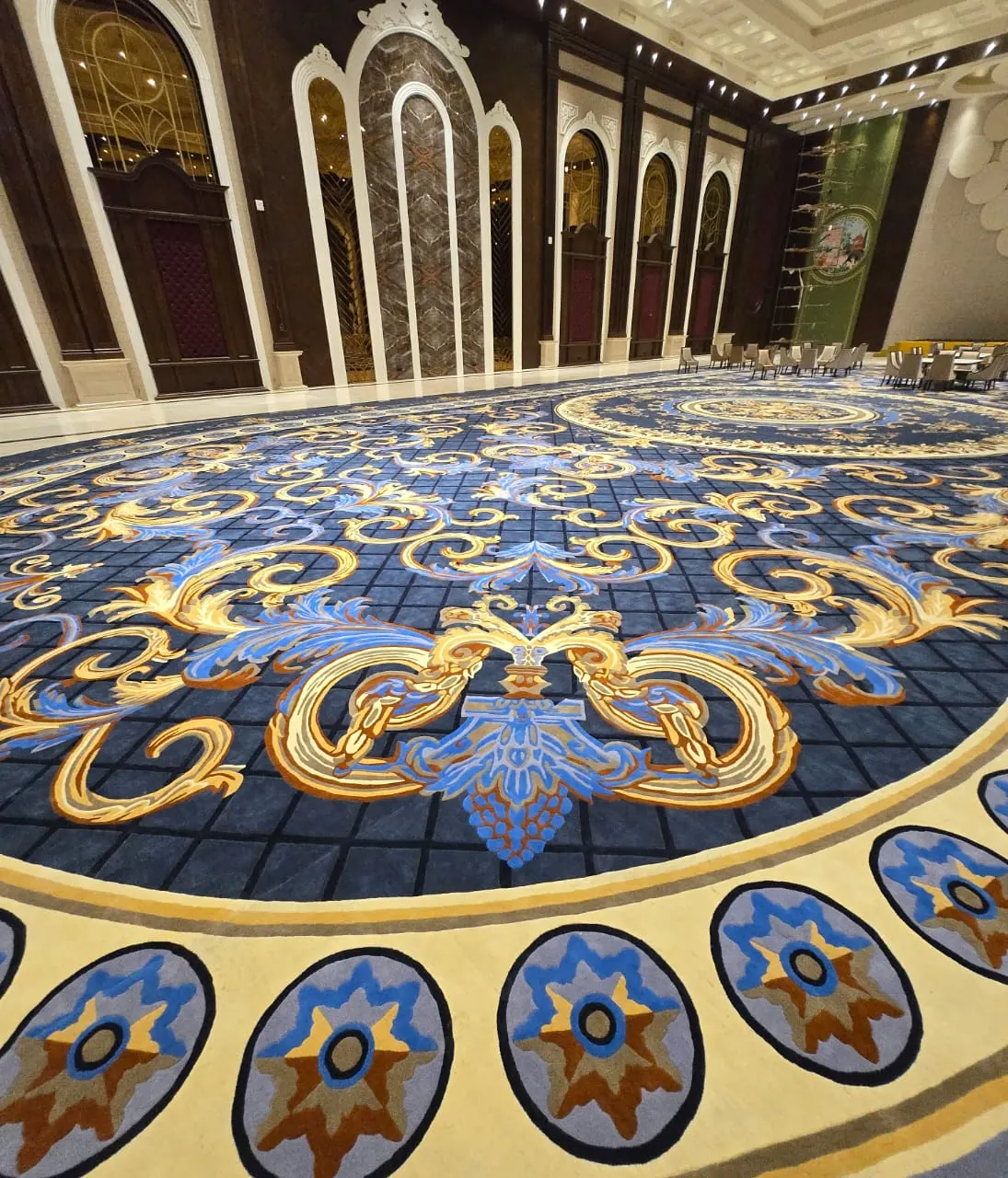
Wool is the traditional fibre for ballroom carpets. It takes dye deeply, springs back under furniture and gives a pile thick enough to carve, so a scroll or a flower stands slightly proud of the ground around it.
How it is made
The design is drawn at full size on a stretched cloth. A tufter follows it colour by colour with a hand-held tufting gun, pushing each strand of yarn through the cloth to form the pile. The back is sealed with latex and a second cloth. Then the face is sheared level and the edges between colours are carved by hand.
Why wool
Wool fibres are springy, so marks from chairs and tables recover. The fibre hides soil well and keeps its colour for years. It is also hard to set alight and tends to put itself out, which matters in a room full of guests.
Any size, any shape
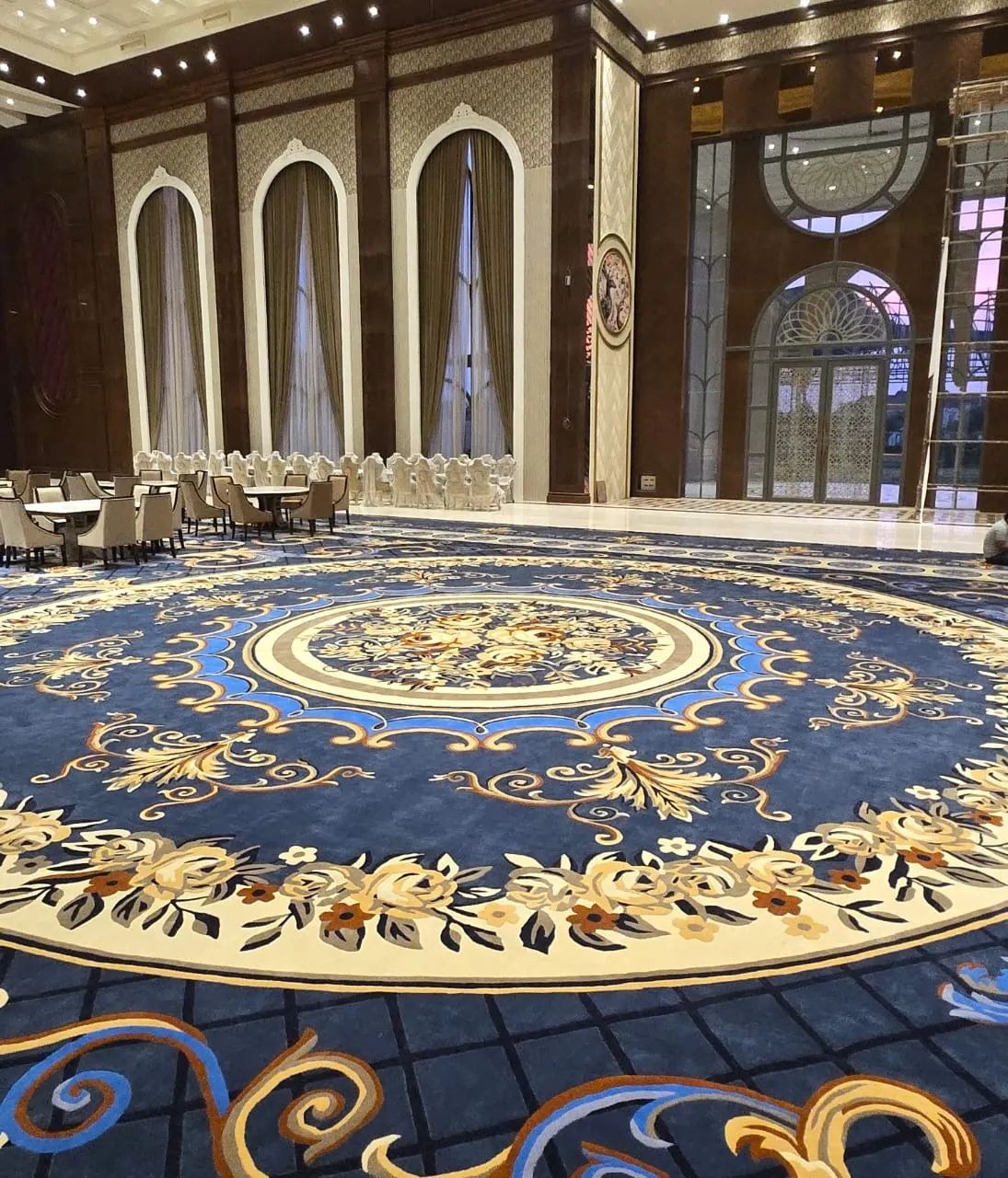
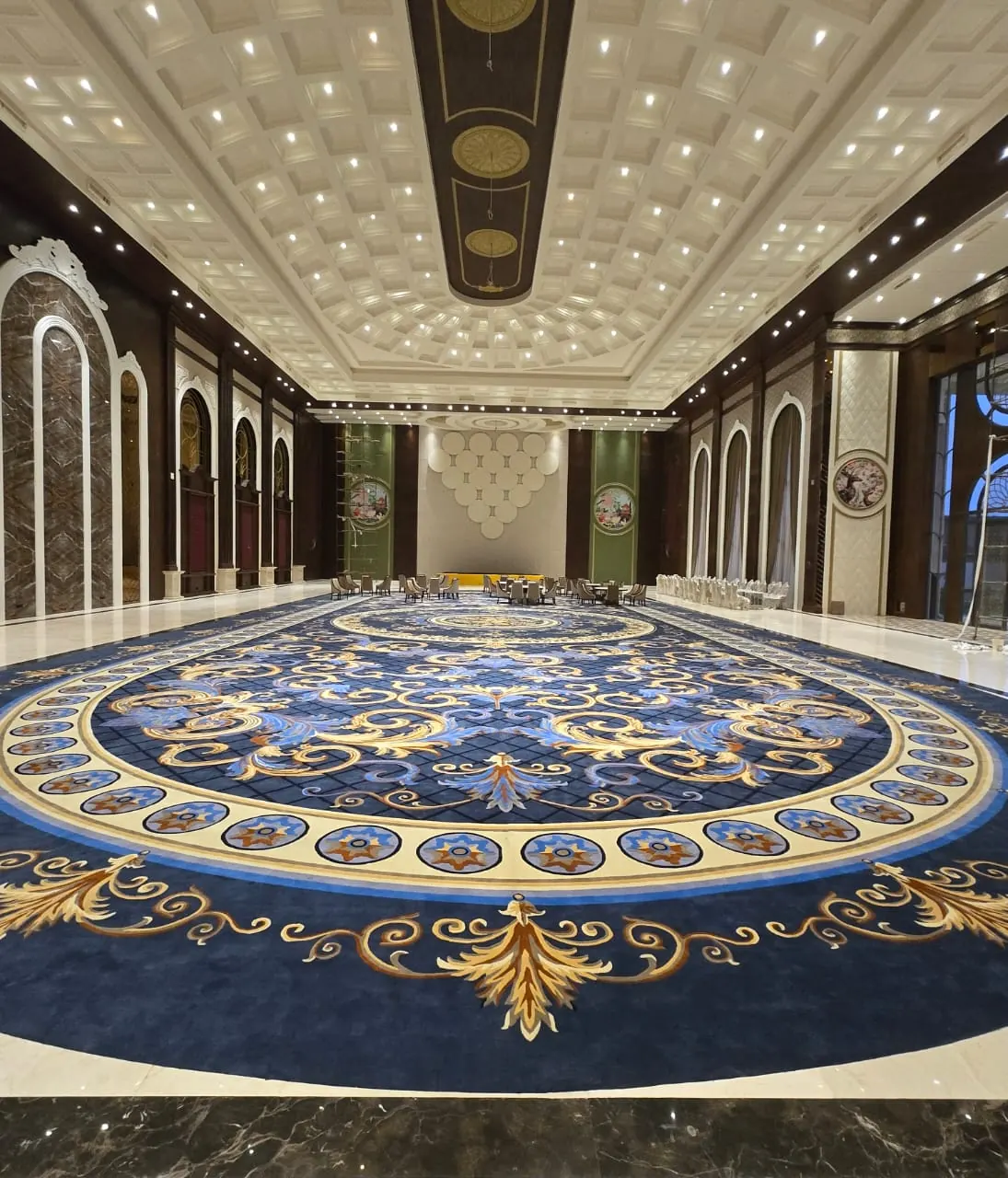
Each carpet is tufted to order, so it can be an oval, a circle or a piece cut to the outline of your floor. Borders can follow the walls, a stage or a dance floor.
Good to know
A new wool carpet sheds loose fibre for the first few weeks, and regular vacuuming clears it. Wool costs more than nylon for the same design.
Compare the other constructionsHand-tufted nylonPrinted nylon
Tell us about your room
Send the floor size, the city and a few photos. We will come back with design options and a written quote.